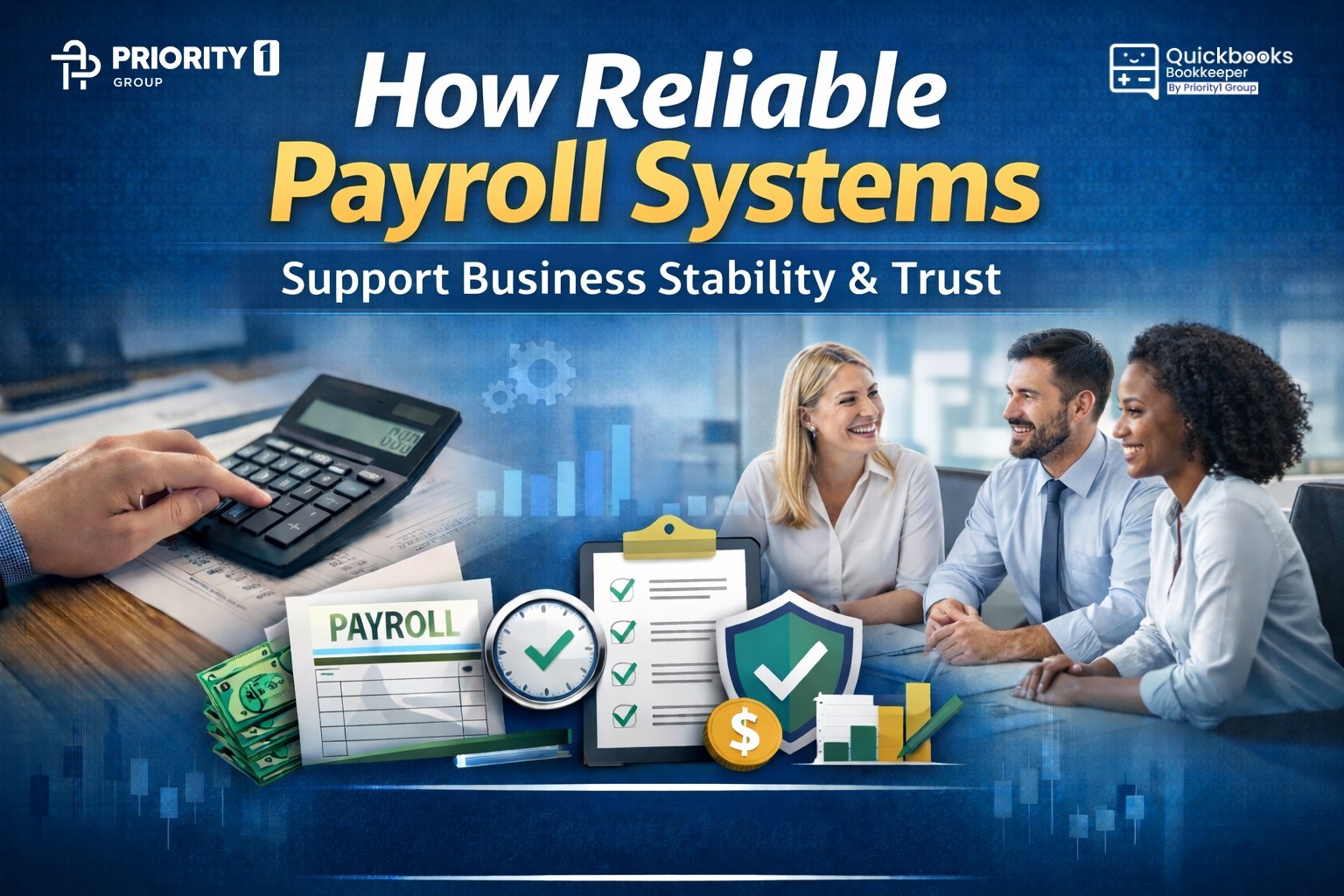
Payroll is not just “paying people on time”. It is one of the fastest ways your team decides whether your business is organised, fair, and trustworthy. When payroll is clean and consistent, people feel secure, your reporting stays accurate, and your business runs with fewer surprises. When payroll is messy, the stress spreads into cash planning, compliance, staff morale, and decision making.
This is why Priority1 Group treats payroll like a stability system, not an admin task.
A reliable payroll setup protects two things that keep businesses steady:
When wages are processed accurately, you can:
Trust is built when:
That trust improves retention, lowers disputes, and strengthens your reputation.
A reliable payroll system is not one perfect pay run. It is a repeatable process that works even when things change.
A strong system typically includes three pillars:
A dependable workflow answers:
If these steps are consistent, payroll becomes predictable.
Payroll becomes fragile when it relies on one person’s memory.
Reliability improves quickly when you have:
Software alone does not create reliability. Configuration and consistency do.
A stable setup includes:
Reliability is not only about being on time. It is also about being able to prove what happened if someone asks later.
A reliable system supports employee record keeping and reduces risk by ensuring:
This is where payroll compliance Australia becomes easier, because good systems produce good evidence.
Wages are usually one of the largest regular expenses. If payroll changes unexpectedly, cash planning becomes stressful.
Reliable payroll improves stability by supporting:
With firm cut-off dates and approved timesheets, wage costs stop swinging unexpectedly. That makes budgeting far less painful.
When you know your wage commitments, you can schedule supplier payments, plan growth spending, and maintain a buffer without constantly guessing.
When payroll is reconciled properly, your reports reflect reality. That means you can trust your numbers when making decisions.
A practical phrase to remember is payroll reconciliation. If wages do not match the books, reporting becomes unreliable, and so do decisions.
Employees do not separate payroll from leadership. Payroll mistakes feel personal, even when they are accidental.
Reliable payroll reduces friction by:
In growing teams, the impact multiplies. One small issue can quickly turn into multiple unhappy conversations if systems are loose.
If you notice these patterns, reliability is probably costing you time and trust:
These are all solvable, but they usually need a clearer workflow.
Here is a practical approach that works for most small and medium businesses.
Create a consistent schedule:
Consistency reduces errors more than almost any other change.
A clear payroll workflow for small business includes:
Write down what happens when:
This is the fastest way to learn how to avoid payroll errors without repeating the same problems.
Treat reconciliation like part of payroll, not an optional extra. Confirm wages and related items match your bookkeeping each pay run.
This single habit improves reporting accuracy and reduces unpleasant surprises later.
If one person is away, payroll should still run. That is a real test of reliability.
If you want payroll that is consistent, compliant, and easy to manage, you can explore professional support here: Payroll Management Services.
At Priority1 Group, the goal is simple: build a payroll process that runs smoothly week after week, keeps records tidy, and supports confident business decisions.
Reliable payroll matters more than most businesses realise. It keeps wage costs predictable, reporting clean, and builds trust across your team while reducing compliance risk.
If you want to simplify payroll, cut errors, and stay on top of reporting, the payroll management team at Priority1 Group can help you build a dependable system that supports long term growth.

* We never spam your email
38B Douglas Street, Milton QLD, 4064 Australia
Monday - Friday 09:30 AM - 05:30 PM
© 2026 All Rights Reserved.