
In today’s fast-paced business world, managing finances efficiently is more important than ever. For National Disability Insurance Scheme (NDIS) providers, the need for accurate, up-to-date financial management is critical not only for the growth of the business but also for compliance with government regulations. While many organisations choose to manage their bookkeeping in-house, outsourcing this essential function is becoming an increasingly popular option. This definitive guide walks you through the entire process of outsourcing your bookkeeping, its benefits, and why partnering with the right outsourced bookkeeping provider can transform your business operations.
Bookkeeping is a crucial function for any business, and NDIS providers are no exception. NDIS providers manage complex funding arrangements, service agreements, and participant claims, all of which require detailed tracking and financial oversight. If not handled correctly, this can lead to compliance issues, financial mismanagement, or even audits.
One of the most significant advantages of outsourcing your bookkeeping is cost savings. When you outsource, you eliminate the need for hiring full-time staff, providing employee benefits, and investing in training. Outsourcing allows NDIS providers to access high-quality bookkeeping services without the high overhead costs associated with an in-house team.
NDIS bookkeeping is unique. It involves understanding the specific regulations and compliance standards that apply to the NDIS sector. Partnering with an outsourced bookkeeping service like NDIS Bookkeeper ensures that you get access to experts who understand the intricacies of NDIS funding, claims, and regulations. This specialised knowledge reduces the risk of errors and ensures your business remains compliant with all NDIS requirements.
Outsourcing allows you to streamline your operations. Professional bookkeepers are highly skilled in managing financial records, handling tax preparation, processing invoices, and managing cash flow. By entrusting these tasks to experts, your business can operate more efficiently, with more time dedicated to delivering high-quality care to your participants.
Outsourcing your bookkeeping lets you focus on what you do best providing excellent care and support to your NDIS participants. Instead of spending valuable time managing your finances, you can leave it to the professionals while you concentrate on improving services and expanding your business.
As your business grows, so do your financial needs. Outsourcing your bookkeeping offers the flexibility to scale services quickly without worrying about hiring and training new employees. Whether you’re expanding to new locations or increasing your participant base, offshore bookkeeping services can easily adapt to your growing business needs.
You might be wondering, “What makes NDIS bookkeeping different from general bookkeeping?” While general bookkeeping focuses on the core financial functions of any business, NDIS bookkeeping has unique requirements due to the nature of the NDIS.
Due to these complexities, it’s vital for NDIS providers to partner with a bookkeeper who understands these regulations and can ensure that your business remains compliant.
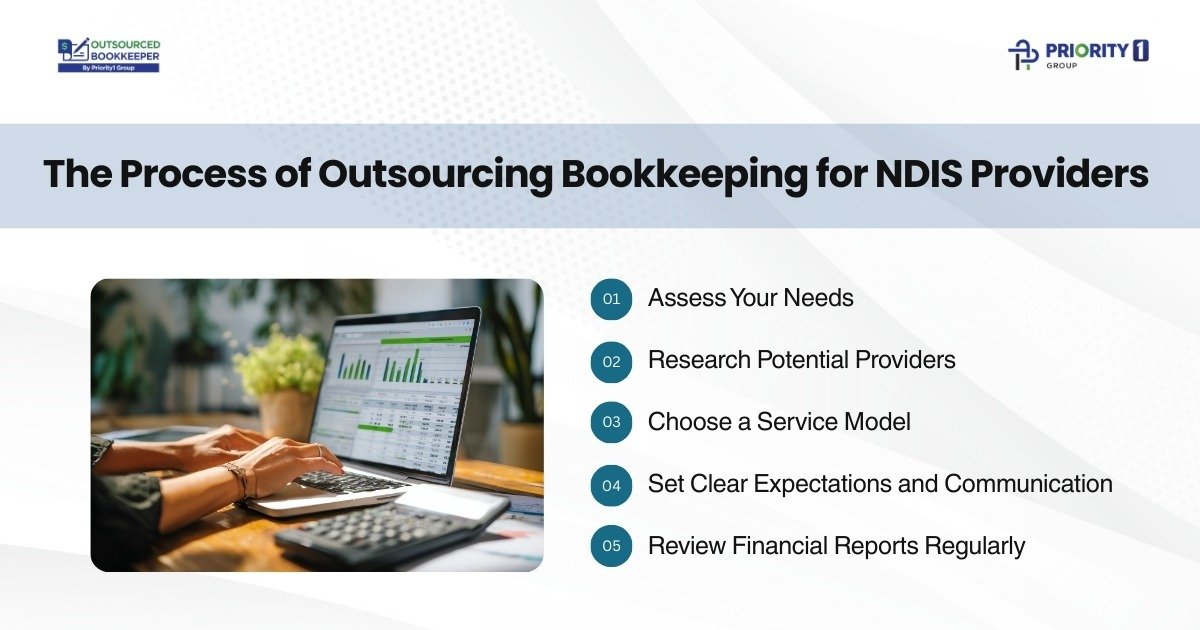
Before outsourcing your bookkeeping, it’s essential to assess your current financial processes and identify areas that require improvement. Are you struggling with cash flow management, tax filing, or participant invoicing? Identifying your specific pain points will help you choose the right outsourced bookkeeping provider.
Not all bookkeeping services are the same. When searching for an outsourcing partner, look for providers with experience in the NDIS sector. They should understand the complexities of NDIS funding and regulations. Check reviews, ask for case studies, and inquire about their expertise in the NDIS space. At Outsourced Bookkeeper by Priority1 Group, we specialise in NDIS bookkeeping, ensuring you receive expert services tailored to your specific needs.
There are various models of outsourced bookkeeping, from hiring offshore bookkeeping services to working with local providers. Offshore bookkeeping offers cost savings but may present challenges in terms of communication and understanding of local regulations. On the other hand, a local provider, like Outsourced Bookkeeper by Priority1 Group, brings the added benefit of familiarity with Australian tax laws and NDIS regulations. Consider the pros and cons of each model based on your business’s needs.
Once you’ve chosen a bookkeeping provider, set clear expectations regarding communication, deadlines, and deliverables. It’s crucial to maintain regular contact to ensure your financial records are up to date and that you remain compliant with NDIS regulations. Clear communication with your outsourced team will keep the bookkeeping process running smoothly.
Outsourcing your bookkeeping does not mean relinquishing control over your finances. Regularly reviewing financial reports and staying involved in the process is vital to ensuring that everything is running as it should. Set up regular meetings or reports to stay updated on your financial health.
For a more detailed comparison of the costs and benefits of outsourced versus in-house bookkeeping, check out our Outsourced Bookkeeping vs In-House: The Real Cost Breakdown.
Even with a solid bookkeeping system in place, NDIS providers often make some common mistakes when managing their finances. Here are a few to watch out for:
As the NDIS sector grows, so does the need for accurate, efficient financial management. Here are some key trends in outsourced bookkeeping for NDIS providers:
To maintain a healthy financial structure, NDIS providers should adopt the following best practices:
Outsourcing your bookkeeping is an excellent decision for NDIS providers looking to streamline their financial processes, improve efficiency, and ensure compliance with regulations. By working with professional Outsourced Bookkeepers like Outsourced Bookkeeper by Priority1 Group, you can have peace of mind knowing that your finances are being managed by experts. This partnership allows you to focus on providing top-notch care to your participants while leaving the financial complexities to the professionals.
Outsource your bookkeeping today to ensure accurate financial management, maintain compliance, and support the growth of your NDIS business. Contact us today to learn more about how we can help!