

Let’s be honest. Keeping your books in order is probably the last thing on your mind when you’re juggling a million other things as a small business owner. Between client calls, managing staff, and keeping things running smoothly, the last thing you want to think about is your financials. But here’s the kicker: ignoring your books for too long creates a snowball effect, and before you know it, those minor errors become major headaches.
This is where an outsourced bookkeeping team can be a lifesaver, and not just any team, but one that uses the right tech stack to ensure everything runs efficiently. With the right tools and a consistent weekly routine, you can keep your financials in tip-top shape without the headache.
In this post, we’re going to break down how to build a weekly rhythm with your outsourced bookkeeping team. By the end of this, you’ll have a clear understanding of the tools, processes, and habits to make your bookkeeping as smooth as brushing your teeth every day. Let’s dive in.
It’s easy to think, “I’ll just take care of my books at the end of the month”, but that’s a dangerous game. When you leave things for weeks on end, even small errors can compound, making reconciliation harder and costing you more time in the long run. Think about it: it’s like letting the dishes pile up for weeks. The longer you leave it, the bigger the mess, and the harder it is to clean up.
A weekly rhythm is the sweet spot. By breaking tasks into bite-sized chunks every week, your books stay clean, reconciled, and ready for anything. The key here is consistency. Whether it’s five minutes a day or an hour on Fridays, regular check-ins with your outsourced team help avoid bigger problems down the line.
Before we dive into the tech stack and weekly routine, let’s clarify what “clean books” actually mean in plain English. Clean books simply refer to financial records that are:
Essentially, clean books let you make decisions based on solid, reliable data, not guesswork.
A solid outsourced bookkeeping system is built on trust, clear communication, and consistency. The right processes ensure that your bookkeeping is efficient, accurate, and up to date, without unnecessary back-and-forth.
Here’s a breakdown of how to structure your weekly bookkeeping routine to keep things running smoothly.
When you outsource your bookkeeping, it’s important to define clear roles and responsibilities from the outset. Everyone on your team, whether they’re in-house or external, should know exactly what’s expected of them each week. This means setting clear boundaries around what tasks your outsourced bookkeeper is responsible for, and ensuring you have a system for reviewing and approving their work. This clarity helps prevent errors and keeps your bookkeeping on track.
To ensure your outsourced team can do their job efficiently, establish a simple system for submitting and organising financial documents. Make sure your receipts, invoices, and bank statements are easy to find and access. Organise everything by category (e.g. sales, expenses, payables) and date, so your outsourced team can quickly enter and categorise data correctly. A consistent system for document submission means fewer mistakes and more accurate financial records.
Weekly reconciliation of your accounts is a must. Even if your outsourced team is doing the heavy lifting, it’s important to set aside time each week to review their progress. This involves checking that all transactions have been correctly recorded and matched to the appropriate accounts. Regular, weekly reconciliations help catch any discrepancies early, preventing a build-up of errors that would take longer to fix later.
Outsourcing bookkeeping doesn’t mean you can step away completely. You should have a regular check-in with your team, whether that’s once a week or every other week, to ensure everything is going smoothly. These check-ins can serve as a way to address any concerns, discuss any inconsistencies, and make sure there are no delays. Even though the work is outsourced, having an open line of communication will help build trust and ensure that your team stays aligned with your business goals.
Your outsourced bookkeeping team is an extension of your business. Make sure they’re equipped with the latest information about your business and any changes in your financial processes. Ongoing training and support are key to keeping your outsourced team in the loop and ensuring they can handle new challenges that might arise. Whether it’s changes in your accounting practices or new financial regulations, regular updates help keep your team sharp and ready to adapt.
By creating clear processes and maintaining regular communication, you can ensure your outsourced bookkeeping team works as a seamless extension of your business. When everyone is on the same page, and your systems are organised and efficient, your bookkeeping will stay accurate, up to date, and stress-free.
To ensure your books are always in order, here’s a simple weekly routine to follow. Each day has a specific task to keep things flowing smoothly.
Start the week by checking your bank feed. Your outsourced team should be reconciling any transactions that came through the weekend. Double-check that everything looks correct and categorise any new transactions.
Check the status of any outstanding invoices. If you’re using accounting software, this should be straightforward to see. Remind clients who are behind and mark off any paid invoices.
Focus on your business expenses. Make sure all receipts have been scanned and entered correctly. You might also want to look through your payables to ensure nothing is overdue.
If your business has employees, today is for payroll. Ensure all employee hours are logged, and the payroll has been processed. Don’t forget to set aside superannuation payments!
Wrap up the week by reviewing your books. Make sure everything from invoices to receipts has been categorised correctly. If everything looks good, your outsourced bookkeeper can then send you a summary of the week’s updates.
Running your own business means you’ve got to be proactive. If you see any of these red flags on your dashboard, it’s time to act fast:
Bank discrepancies: If the bank feed doesn’t match your accounting software, something’s off.
Uncategorised transactions: If a significant number of transactions aren’t categorised, you might be missing out on deductions.
It’s impossible to run a business without thinking about GST and BAS. Fortunately, with a weekly routine in place, you don’t need to do your BAS every week, just stay consistent. Here are some habits to form:
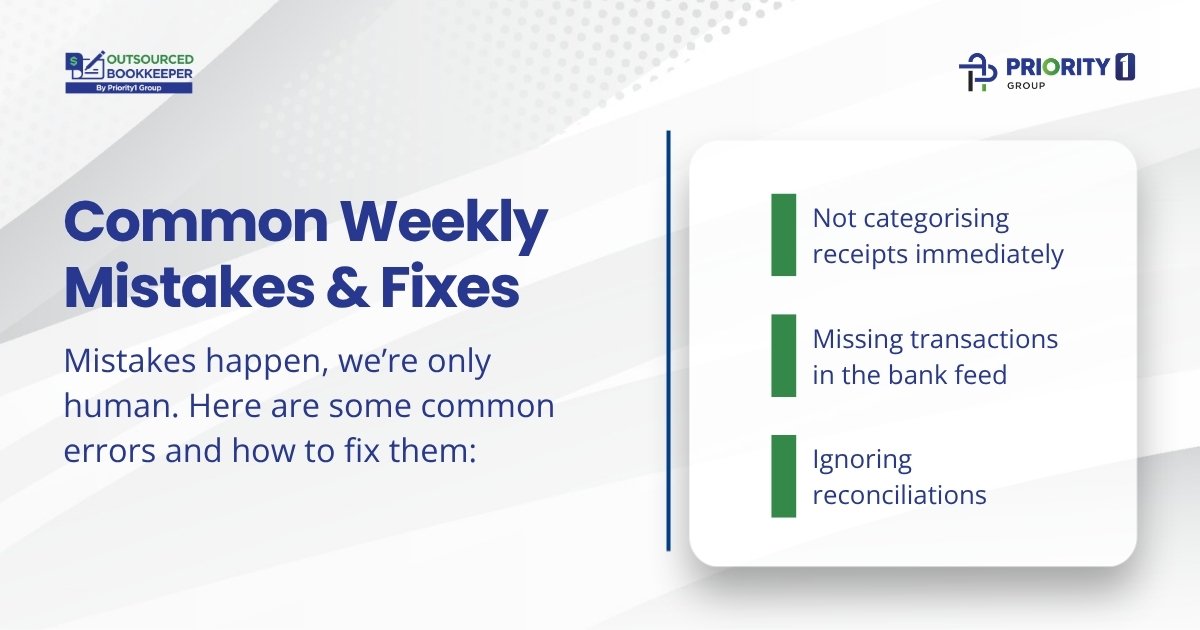
Mistakes happen, we’re only human. Here are some common errors and how to fix them:
If you’re starting to feel overwhelmed, it might be time to bring in support. A good rule of thumb is if you’re spending more than two hours a week on bookkeeping tasks, outsourcing could save you time and stress.
Look for help that’s not just about ticking boxes but provides ongoing support. For example, Priority1 Group offers expert Outsourced Bookkeeping Services, and QuickBooks Bookkeepers can help with finance routines your businesses.
Running a business is tough enough without worrying about your financials. By setting up a weekly rhythm with the right tech stack and outsourcing support, you can keep your books clean and avoid costly mistakes.
Ready to take the stress out of your bookkeeping? Priority1 Group specialises in Offshore Bookkeeping Services and ongoing support tailored to your needs. Let us help you build a system that works for your business, so you can focus on what really matters.
Visit Priority1 Group for more details.