
Running a growing business is exciting, but it can also become stressful when the admin starts increasing. In the early days, many business owners manage bookkeeping themselves. They send invoices, check payments, save receipts, prepare BAS information, and keep payroll records updated.
At first, this may feel manageable. But as the business grows, the workload grows too. There are more customers, more invoices, more bills, more payments, and sometimes more staff to manage. What once took one hour each week can slowly become several hours of extra admin.
This is where many business owners start feeling pressure. Bookkeeping may get pushed to the end of the day or the weekend. Reports may not be checked often. Invoices may go out late. Receipts may be hard to find. These small issues can affect cash flow, payroll, BAS preparation, and business decisions.
Outsourced bookkeeping can be a smart choice for growing Australian businesses because it gives business owners support without the cost of hiring an in-house bookkeeper. It helps keep records organised, reports clearer, and financial admin easier to manage.
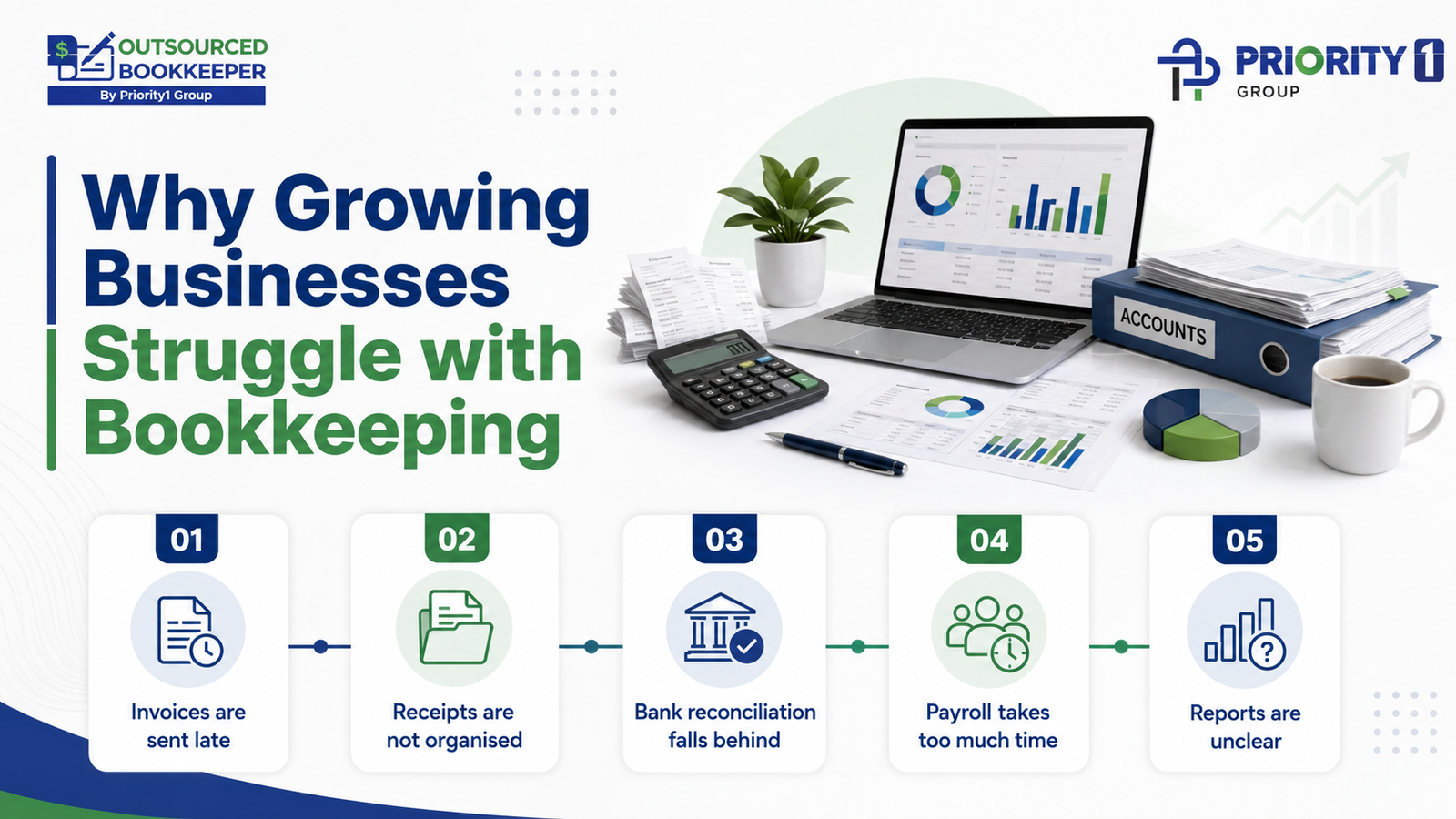
When a business grows, bookkeeping becomes more detailed. There are more transactions to record, more supplier bills to check, more payments to match, and more records to keep. If the business has employees, payroll also becomes a regular task that needs careful attention.
Many business owners are not struggling because they are careless. They are struggling because they are busy. They may be handling customers, staff, sales, service delivery, marketing, and daily problems while also trying to keep their books updated.
Common signs of bookkeeping pressure include:
Bookkeeping should help owners feel more in control. It should not become another task that creates pressure.
One of the biggest benefits of outsourcing bookkeeping is time. Business owners often spend hours each month entering bills, checking payments, sorting receipts, reviewing invoices, and preparing information for BAS.
When these tasks are outsourced, the owner can focus more on customers, staff, service quality, and growth. This does not mean the owner loses control. A good bookkeeping process should give the owner better visibility, not less.
For example, instead of sorting receipts at the end of the month, the business can use a simple system to upload and store them regularly. Instead of waiting until BAS time to check records, transactions can be reconciled more often. Instead of guessing which invoices are unpaid, the business can review outstanding payments clearly.
This is where outsourced bookkeeping services can support growing businesses in a practical way. They help keep everyday financial tasks moving, so the owner is not always trying to catch up.
Outsourcing can also reduce the pressure of hiring. Hiring an in-house bookkeeper may not suit every small business. It can involve wages, super, leave, training, software access, and management time. Some businesses do not need a full-time bookkeeper, but they still need regular bookkeeping support.
Outsourced support can be more flexible. A business may need help with weekly reconciliation, monthly reports, payroll records, invoice follow-up, BAS preparation, or general bookkeeping organisation.
For businesses connected to disability or care services, this guide on NDIS pricing updates and provider bookkeeping explains how pricing, invoicing, payroll, and records can affect financial clarity.
Outsourcing bookkeeping is not only about entering numbers. It is about keeping the financial side of the business organised throughout the month.
Useful tasks to outsource include:
These tasks may sound simple, but they are often the first things that fall behind when the business gets busy. If invoices are not followed up, the business may not know how much money is still unpaid. If receipts are missing, expenses may not be recorded properly. If payroll records are not checked, mistakes may take time to fix.
Many businesses also look for support with payroll-related admin. Services such as payroll outsourcing Australia can be useful when payroll is taking too much time or needs better accuracy. Even if payroll is handled separately, bookkeeping records still need to match wage payments, super, and bank transactions.
For specialised provider businesses, resources from NDIS Bookkeeper may also help where NDIS claiming, cash flow, and provider records need extra attention. This article on common claiming mistakes after NDIS price guide updates explains how small record gaps can affect financial processes in NDIS businesses.
A growing business needs more than sales. It also needs clear numbers. A business may have more customers, but costs may also be increasing. Staff wages, supplier bills, software, rent, vehicles, and other costs can reduce profit if they are not monitored.
Monthly reports help business owners understand what is really happening. They can show whether invoices are being paid on time, whether expenses are rising, whether payroll is manageable, and whether the business has enough cash available for BAS, wages, super, and bills.
Without clear bookkeeping, owners may make decisions based only on the bank balance. But the bank balance does not always show unpaid bills, upcoming payroll, BAS obligations, or invoices that have not been paid yet.
Good bookkeeping gives business owners more confidence. It helps them plan better, manage costs, follow up payments, and make better decisions.
Hiring an in-house bookkeeper can be helpful for some businesses, but it is not always the right choice for small or growing businesses. The business may not have enough work for a full-time role. A part-time role can still involve training, leave cover, payroll costs, and supervision.
Outsourcing can be more practical because the business gets support when needed without adding another employee. It can also reduce pressure on the owner or admin staff who may already have too much to do.
Many bookkeeping tasks can now be handled remotely through cloud accounting software, secure document sharing, and online communication. This makes outsourced bookkeeping suitable for many Australian businesses that want support without needing someone in the office every day.
Outsourced bookkeeping is a smart choice for growing businesses because it saves time, reduces admin pressure, and keeps financial records organised. It gives business owners support without the cost and responsibility of hiring an in-house bookkeeper.
For Australian small businesses, clean records are important for invoicing, payroll checks, BAS preparation, cash flow tracking, accountant reviews, and business planning. When bookkeeping is handled regularly, owners can make decisions with more confidence.
A growing business needs clear numbers, not guesswork. If bookkeeping is taking too much time or falling behind, it may be the right moment to review your process and consider support from Outsourced Bookkeeping by Priority1 Group.