

For NDIS providers, audits are not just periodic checks, they are a continuous responsibility. With evolving compliance standards and increasing scrutiny, maintaining accurate financial records is critical. Yet, many providers still operate reactively, preparing for audits only when required.
This approach often leads to stress, inefficiencies, and compliance risks.
Outsourced bookkeeping offers a smarter alternative. By introducing structured systems, consistent processes, and expert oversight, it ensures your business remains audit-ready all year, without last-minute panic.
Audit readiness means your financial data, documentation, and processes are always accurate, organised, and accessible. It reflects a system where everything is in place, not just numbers, but supporting evidence and compliance alignment.
For NDIS providers, this includes:
When these elements are consistently maintained, audits become routine rather than disruptive.
Despite good intentions, many providers face challenges due to operational gaps rather than lack of effort.
Common issues include:
Over time, these gaps create inefficiencies that only surface during audits, when fixing them becomes urgent and costly.
Outsourced bookkeeping transforms financial management from a reactive task into a proactive system. It ensures that every transaction, record, and report is handled with accuracy and consistency.
To understand how structured outsourcing models work in practice, you can explore this detailed guide:
Outsourced Bookkeeping Services for NDIS: What Providers Must Get Right
By implementing standardised workflows and expert oversight, outsourced bookkeeping ensures your financial systems are always audit-ready.
Outsourced bookkeeping introduces discipline and structure into your financial processes. Here are the core ways it strengthens audit readiness:
This structured approach eliminates last-minute corrections and ensures your records are always reliable.
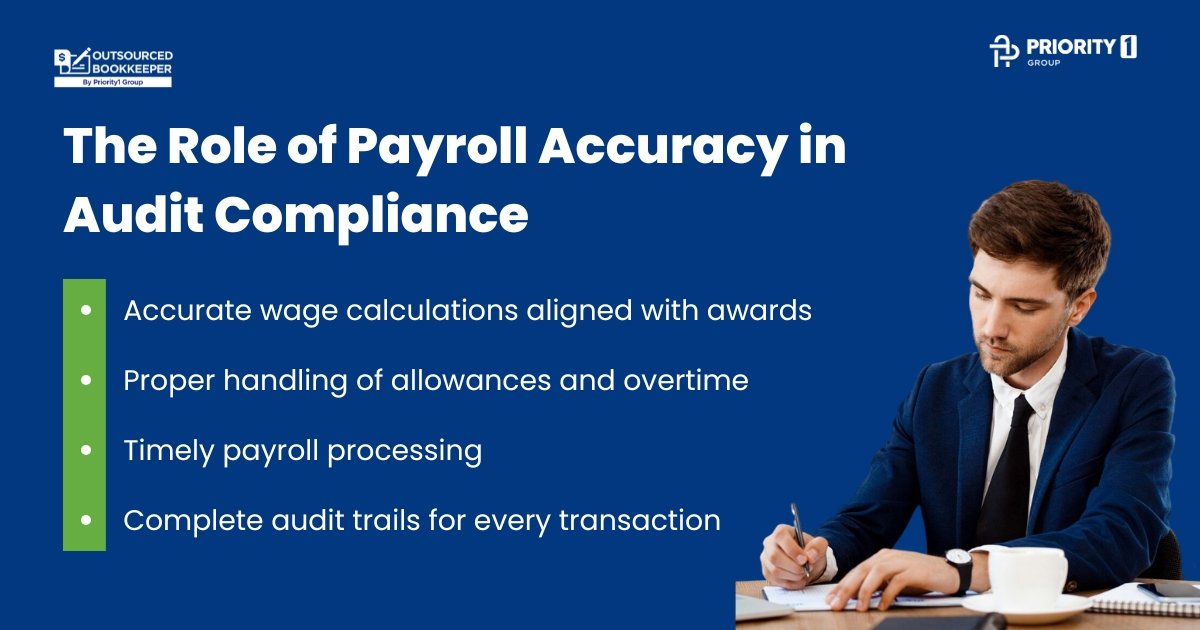
Payroll is one of the most sensitive and complex areas for NDIS providers. Even small errors can lead to compliance issues, employee dissatisfaction, and financial penalties.
With payroll outsourcing Australia, providers can ensure:
This level of precision significantly reduces audit risks while improving operational efficiency.
Modern bookkeeping is powered by technology. Cloud-based platforms, automation tools, and system integrations play a key role in maintaining accuracy and accessibility.
Through remote bookkeeping services, providers benefit from:
This ensures that your financial data is always updated, organised, and ready for review.
Financial accuracy is not just about compliance, it directly impacts service delivery. When bookkeeping systems are efficient, providers can allocate resources better, manage costs effectively, and ensure smooth operations.
In the centre of this structured approach, specialised services like NDIS Bookkeeping ensure that industry-specific requirements are consistently met.
You can explore how accurate accounting influences participant outcomes here:
The Impact of Accurate Accounting on NDIS Client Satisfaction
When finances are well-managed, providers can focus more on delivering quality care rather than fixing operational issues.
Maintaining audit readiness is not just about avoiding penalties, it creates long-term advantages for your organisation.
These benefits contribute directly to business stability and growth.
An audit-ready bookkeeping system is built on consistency, accuracy, and transparency. It typically includes:
When these elements are managed systematically, audits become a routine verification process rather than a challenge.
Selecting the right partner is crucial for achieving audit readiness. Not all bookkeeping services are equipped to handle the complexities of NDIS operations.
Look for providers who offer:
A reliable partner not only manages your books but also strengthens your overall operations.
Even with outsourcing, certain mistakes can reduce effectiveness:
Avoiding these pitfalls ensures your bookkeeping system remains strong and audit-ready.
Audit readiness is no longer something to prepare for, it is something to maintain consistently. For NDIS providers, accurate financial management is essential for compliance, operational efficiency, and delivering high-quality care.
Outsourced bookkeeping provides the structure, expertise, and systems needed to achieve this. It transforms financial management into a proactive process, ensuring your business is always prepared, no matter when an audit occurs.
Partnering with a professional Outsourced Bookkeeper by Priority1 Group ensures accurate financial management and supports NDIS providers in maintaining compliance, growing their business, and providing high-quality care to participants.