Many NDIS providers and small business owners begin their journey managing finances through spreadsheets. In the early stages, this approach feels simple, cost-effective, and manageable. Tracking income, expenses, and invoices manually can work when transaction volumes are low and operations are straightforward.
However, as the business grows, spreadsheets begin to create more problems than solutions. Errors increase, data becomes harder to manage, and financial clarity starts to fade. What once felt organised slowly turns into a time-consuming and stressful process.
Transitioning to professional bookkeeping is not just about switching tools, it is about building a reliable financial system that supports growth, compliance, and better decision-making.
Spreadsheets rely heavily on manual input, which increases the chances of human error. Even a small mistake, such as an incorrect formula or a missed entry, can lead to inaccurate reporting. Over time, these small issues accumulate and create larger financial inconsistencies.
For NDIS providers, this risk is even greater. Financial records are closely tied to participant funding, payroll, invoicing, and compliance. Any inaccuracies can affect claims, reporting, and audit outcomes.
Another limitation is the lack of real-time data. Spreadsheets do not update automatically, making it difficult to get a clear picture of cash flow, outstanding invoices, or financial performance at any given time. This delay can impact decision-making and overall business efficiency.
Recognising the right time to transition is important. Many businesses continue using spreadsheets longer than they should, which increases operational risks.
Here are some clear signs that indicate it’s time to upgrade:
When these issues become regular, it is a strong indication that your current system is no longer sustainable.
Professional bookkeeping introduces structure, automation, and expert oversight into financial management. Instead of manually updating spreadsheets, transactions are automatically recorded, categorised, and reconciled using cloud-based systems.
This shift improves accuracy and ensures consistency across all financial processes. It also provides real-time financial insights, allowing business owners to make informed decisions quickly.
For NDIS providers, professional bookkeeping ensures better compliance, clearer documentation, and improved audit readiness. It transforms financial management from a reactive task into a proactive system.
While spreadsheets may appear cost-effective on the surface, they often carry hidden costs that many business owners overlook. Time spent correcting errors, reconciling mismatched data, and manually updating records can quickly add up. What seems like a saving in software or staffing often becomes a loss in productivity and accuracy.
For NDIS providers, these hidden costs can be even more significant. Delays in invoicing or incorrect claims can directly impact cash flow, while payroll inaccuracies can affect staff satisfaction and compliance. Over time, these small inefficiencies can limit growth and create unnecessary stress.
Moving to professional bookkeeping is not just about improving systems—it is about eliminating these hidden inefficiencies and creating a more stable financial environment.
Transitioning from spreadsheets to professional bookkeeping can feel overwhelming, but with the right approach, it becomes manageable.
The first step is reviewing your current financial setup. This includes understanding how your spreadsheets are structured, identifying gaps, and evaluating data accuracy. Once this is clear, the next step is selecting the right accounting software that suits your business needs.
After choosing a platform, historical data must be migrated carefully to ensure continuity. This process should be handled with attention to detail to avoid errors in reporting. Finally, new workflows should be established for invoicing, payroll, reconciliations, and reporting, ensuring consistency going forward.
During this process, many businesses choose to work with experts who can guide them through each stage. For a deeper understanding of how structured support can improve financial systems, you can explore: Outsourced Bookkeeping Services That Support Cash Flow and Growth
Before moving to a professional bookkeeping system, it is important to prepare your existing financial data. This step is often underestimated but plays a crucial role in ensuring a smooth transition.
Start by reviewing your current spreadsheets for errors, duplicate entries, and missing information. Cleaning your data before migration ensures that your new system starts with accurate and reliable information. It is also helpful to organise documents such as invoices, receipts, and payroll records so they can be easily integrated into the new system.
Additionally, defining your financial workflows early, such as how invoices will be raised, how expenses will be tracked, and how payroll will be managed, helps avoid confusion after the transition. This preparation creates a strong foundation for long-term efficiency.
Outsourcing simplifies the transition by bringing in expertise and structured processes. Instead of managing everything internally, businesses can rely on professionals to set up systems, migrate data, and manage ongoing bookkeeping tasks.
By using bookkeeping outsourcing services, providers can ensure their financial systems are accurate, organised, and scalable from the beginning. This approach reduces the risk of errors and helps establish strong financial practices.
Modern bookkeeping systems are powered by technology that automates repetitive tasks and improves efficiency. Bank feeds, automated categorisation, invoice tracking, and reporting tools reduce manual work significantly.
This level of automation allows businesses to focus on strategic decisions rather than administrative tasks. It also ensures that financial data is always updated and accessible.
Through remote bookkeeping services, businesses can collaborate with their bookkeeping team in real time, access financial data securely, and maintain organised records without being tied to a physical location.
In the NDIS sector, financial accuracy is directly linked to service quality. Errors in bookkeeping can impact participant funding, payroll processing, and compliance reporting.
Accurate records ensure that claims are processed correctly, staff are paid accurately, and financial reports reflect the true performance of the organisation.
In the middle of this transition, specialised solutions like NDIS Bookkeeping help providers align their financial systems with industry requirements. This ensures that compliance standards are consistently met.
To understand how financial accuracy influences participant outcomes, you can read: The Impact of Accurate Accounting on NDIS Client Satisfaction
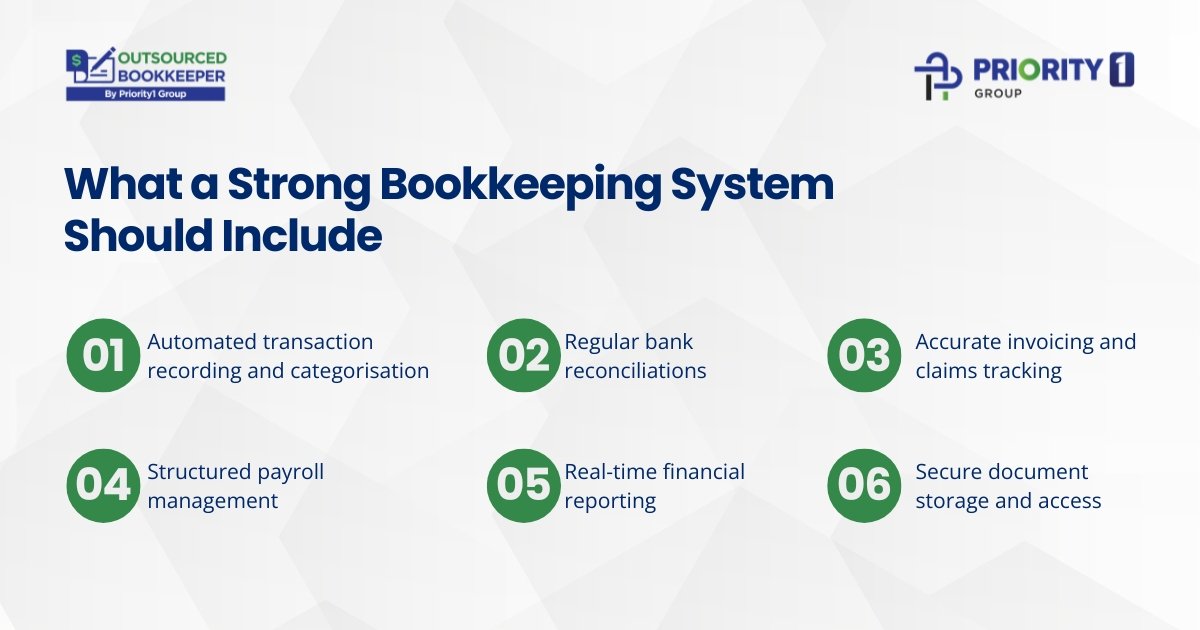
A professional bookkeeping system is built on consistency and clarity. It should include:
When these elements are in place, financial management becomes more efficient and reliable.
Transitioning to a new system requires careful planning. Avoiding common mistakes can make the process smoother:
Taking a structured approach helps prevent these issues and ensures long-term success.
One of the biggest advantages of moving away from spreadsheets is the confidence it brings to business owners. When financial data is accurate, organised, and updated in real time, decision-making becomes much easier.
Instead of second-guessing numbers or relying on outdated reports, providers can clearly understand their financial position at any time. This clarity supports better planning, reduces uncertainty, and allows business owners to focus on growth rather than fixing issues.
For NDIS providers, this confidence is particularly important because it ensures that operational decisions are backed by reliable data, ultimately improving both business performance and participant outcomes.
Moving to professional bookkeeping creates a strong foundation for growth. With accurate financial data, businesses can plan effectively, manage cash flow, and make informed decisions.
It also improves credibility with stakeholders, including participants, regulators, and partners. For NDIS providers, this translates into better service delivery, stronger compliance, and improved operational efficiency.
As businesses grow, having a reliable financial system becomes essential for maintaining stability and scaling operations effectively.
Transitioning from DIY spreadsheets to professional bookkeeping is a crucial step for growing businesses, especially in the NDIS sector. While spreadsheets may work initially, they cannot support the complexity and compliance requirements of a scaling organisation.
Professional bookkeeping introduces accuracy, structure, and efficiency, ensuring financial systems remain reliable and audit-ready. With the support of outsourcing and modern technology, this transition becomes smoother and more effective.
Partnering with a professional Outsourced Bookkeeper by Priority1 Group ensures accurate financial management and supports NDIS providers in maintaining compliance, growing their business, and providing high-quality care to participants.