Effective financial management is a critical part of running any business, and bookkeeping plays a pivotal role in keeping operations smooth, compliant, and profitable. As businesses evolve and grow, one of the most important decisions they face is whether to handle their bookkeeping in-house or outsource it to a professional service. This decision can significantly impact your business’s efficiency, cost-effectiveness, and ability to scale.
In this blog, we will explore the pros and cons of in-house bookkeeping versus outsourced bookkeeping and help you determine which approach is right for your business at its current stage. We’ll also examine the importance of professional bookkeeping services and why industry-specific knowledge is essential, particularly for businesses like NDIS providers that deal with complex regulatory requirements.
Bookkeeping is essential for any business, regardless of industry. It involves recording and managing financial transactions such as invoices, payments, and expenses, which are critical for generating accurate financial reports and ensuring compliance with tax regulations. Bookkeeping also helps businesses monitor cash flow, track financial performance, and make informed decisions.
Professional bookkeeping services go beyond simply recording transactions; they also provide valuable insights into the financial health of a business. For businesses in highly regulated industries, like the NDIS sector, specialised bookkeeping services are particularly important to stay compliant with industry-specific regulations. Whether you choose an in-house or outsourced bookkeeper, it’s crucial that your bookkeeper understands your business’s unique financial needs. For NDIS providers, partnering with an experienced bookkeeper like NDIS Bookkeeper ensures that your financial processes align with NDIS regulations and compliance requirements.
One of the biggest benefits of having an in-house bookkeeper is direct control. You can oversee their work, make quick adjustments, and ensure your financial processes align closely with your business objectives. Immediate access to your bookkeeper allows for fast communication and resolution of any issues.
In-house bookkeepers develop a detailed understanding of your business’s financial processes, operations, and goals. This familiarity enables them to identify financial trends, spot potential problems, and tailor their advice to your specific needs.
With an in-house bookkeeper, you can receive up-to-date financial information and reports without any delay. This is particularly important for businesses that require frequent financial updates to make timely decisions.
One of the biggest downsides of in-house bookkeeping is the cost. In addition to salary, you’ll need to cover benefits, office space, training, and equipment. These costs can be significant, especially for small businesses that may not have the budget for a full-time bookkeeper.
In-house bookkeepers may lack the specialised knowledge required for specific industries. While they may be proficient in general bookkeeping, they may not fully understand the unique challenges and regulatory requirements your business faces. For example, NDIS providers require bookkeepers with expertise in NDIS-specific financial management, including claims and participant funding.
As your business grows, your bookkeeping needs will likely increase. Hiring additional in-house staff or expanding the capabilities of a single bookkeeper can be costly and time-consuming. Scalability can become an issue, especially if you’re trying to manage complex financial operations across multiple locations or service areas.
Outsourcing your bookkeeping can be far more affordable than hiring an in-house team. When you partner with an outsourced bookkeeper, you eliminate the need for salaries, benefits, and training costs. Many businesses, especially small and medium-sized enterprises, find that outsourcing is a more cost-effective way to manage their finances.
Outsourced bookkeeping services often come with specialised expertise. These firms hire professionals with a deep understanding of bookkeeping for various industries, from healthcare and NDIS services to retail and manufacturing. They are well-versed in the latest financial regulations and compliance standards, which is crucial for businesses in regulated sectors.
Outsourcing provides greater flexibility as your business grows. You can easily scale bookkeeping services up or down based on your business’s needs, without the logistical challenges of hiring or laying off staff. Outsourcing also allows you to take advantage of advanced tools and technologies that may not be accessible with in-house teams.
By outsourcing your bookkeeping, you can free up valuable time and resources. This allows you to focus on the core aspects of your business, such as product development, customer service, or sales, rather than spending time managing financial records.
Outsourcing, particularly to offshore firms, can sometimes lead to communication barriers. Time zone differences, language issues, or lack of familiarity with your business can cause delays and misunderstandings. However, setting clear expectations and maintaining regular communication can help mitigate these challenges.
When you outsource your bookkeeping, you may feel that you have less direct control over the process. While you can review reports and make decisions, you don’t have the same day-to-day oversight as you would with an in-house team. Establishing strong processes and clear reporting timelines can help maintain control.
Sharing sensitive financial data with an outsourced provider requires careful consideration of data security protocols. Make sure that the outsourced firm follows strict data protection guidelines to ensure your business’s financial information is safe from breaches.
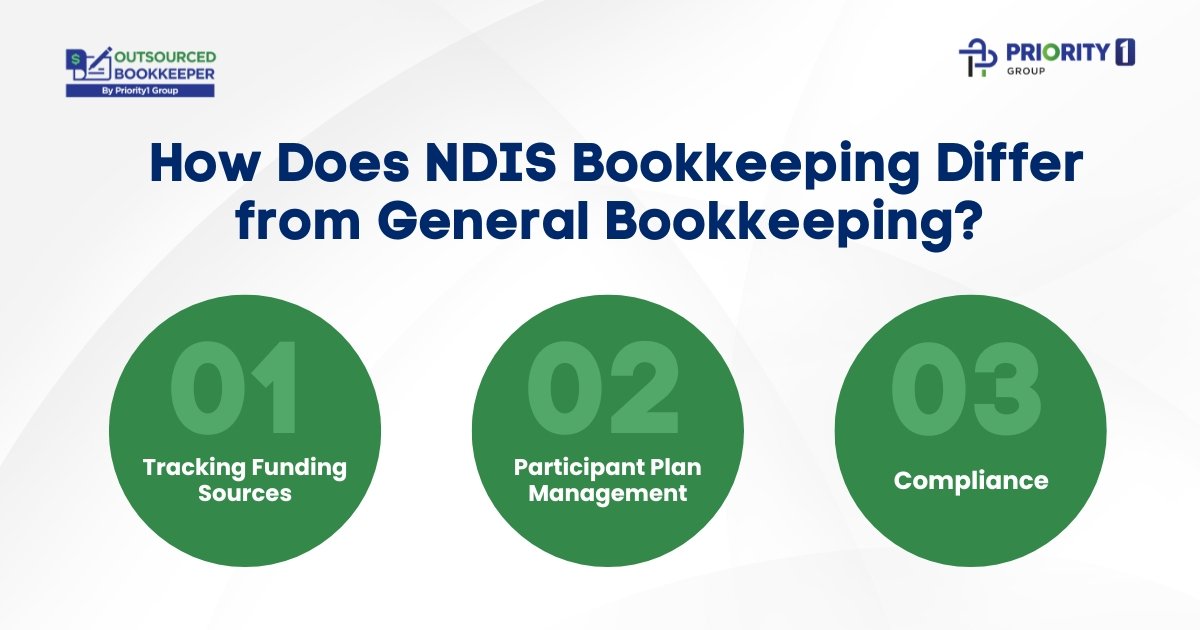
While general bookkeeping covers the financial management of all types of businesses, NDIS bookkeeping requires specialised knowledge due to the complexity of the NDIS funding system. NDIS providers manage multiple streams of funding from government sources and handle complex participant claims. In-house bookkeepers or general outsourced bookkeepers may not be fully equipped to handle the intricacies of NDIS financial management.
NDIS providers receive funding from different sources, each with its own reporting requirements. Keeping track of these streams is crucial for accurate financial reporting.
Participants’ funding plans change regularly, which can affect billing and claims. NDIS bookkeepers must stay on top of these changes to ensure accurate invoicing.
The NDIS is governed by strict regulations. A bookkeeper who understands these regulations can help ensure that your business stays compliant, avoiding costly fines or audits.
As businesses evolve, so do bookkeeping practices. Here are some trends that are shaping the industry:
More and more businesses are adopting cloud-based bookkeeping services. These solutions offer real-time access to financial data, making it easier for business owners to track finances, review reports, and collaborate with their bookkeeping team.
Automation tools are revolutionising the bookkeeping industry. From invoicing and payroll to tax preparation, businesses are increasingly using automated systems to streamline financial processes, reduce errors, and save time.
With the increasing amount of sensitive financial data being shared online, data security has become a top priority for both in-house and outsourced bookkeeping services. Providers are investing heavily in secure platforms to protect their clients’ financial information.
Many businesses are turning to offshore bookkeeping providers for cost savings. These services allow businesses to access highly skilled professionals at a fraction of the cost of in-house teams. However, it’s important to ensure that offshore bookkeepers are well-versed in the regulations that apply to your specific industry.
Regardless of whether you choose in-house or outsourced bookkeeping, here are some best practices to ensure your financial management is up to par:
Investing in software tailored to your industry can simplify tracking and reporting, especially for businesses in regulated sectors.
Regularly reviewing financial reports helps you stay on top of your finances and make informed decisions.
Implementing automated systems for invoicing, payroll, and tax filing can save time and reduce errors.
Stay updated with the latest regulations that affect your business and ensure your bookkeeper is knowledgeable in these areas. You can read more about this in our 2026 Definitive Guide to Outsourcing Your Bookkeeping
Deciding between in-house or outsourcing your bookkeeping depends on the size and stage of your business. For smaller businesses or those in growth stages, outsourcing provides a cost-effective, scalable solution that gives you access to specialised expertise without the overhead of hiring full-time employees.
By partnering with a professional like Outsourced Bookkeeper by Priority1 Group, you ensure that your financial management is in capable hands, allowing you to focus on growing your business and providing high-quality services to your clients. Whether you choose in-house or outsourced, make sure to select a solution that aligns with your business needs, goals, and budget.
Outsource your bookkeeping today to ensure compliance, improve efficiency, and support the growth of your business.